Every year we hear the same story from new buyers: “the mugs from our last supplier cracked,” or “the glaze on our bowls stained after a few washes.” In most cases the factory did nothing wrong. The material was simply matched to the wrong use case – and material choice is the first quality decision in any ceramic project, made long before QC inspection ever happens.
We are ZenithCeramic – Fujian Dehua Guanhong Ceramic Co., Ltd., established in 2005 at No. 98 Juren Road, Dehua County, Quanzhou, Fujian, China. Dehua is the UNESCO-recognized porcelain capital behind the Blanc de Chine ivory-white porcelain heritage, and our kilns run porcelain, stoneware, earthenware and dolomite bodies for clients including Hobby Lobby, TESCO, Michaels and AtHome. This guide is our buyer-facing comparison of porcelain vs stoneware vs earthenware vs dolomite; the deeper reference version lives in our ceramic materials guide.
How do porcelain, stoneware, earthenware and dolomite compare?
The table below shows typical industry ranges. Exact numbers shift with the clay recipe and the kiln schedule, so always ask a supplier for their body’s test data before committing to a large order.
| Property | Porcelain | Stoneware | Earthenware | Dolomite |
|---|---|---|---|---|
| Firing temperature (typical) | ~1,200-1,400°C | ~1,200°C (commonly 1,150-1,250°C) | ~1,000-1,150°C | ~1,000-1,100°C (low-fire) |
| Water absorption | <0.5% (vitrified) | ~1-3% | ~5-10%+ | High – porous low-fire body |
| Durability / chip resistance | Excellent; hardest of the four | Very good; forgiving in daily use | Moderate; chips more easily | Low; decorative use only |
| Weight (same piece size) | Light – walls can run thin | Medium to heavy | Medium | Light |
| Typical products | Premium dinnerware, fine mugs, giftware | Everyday dinnerware, mugs, bakeware, candle jars | Planters, tiles, rustic decor | Figurines, seasonal decorations, painted gifts |
| Cost level | Highest | Mid to high | Low | Low |
| Best for | Premium food contact and gifting | Everyday food contact and candle vessels | Planters and low-stress decor | Decoration only – never food contact |
Two rows decide most buying decisions: firing temperature and water absorption. The hotter a body is fired, the more it vitrifies – the denser it becomes, and the less water it absorbs. Absorption is why a porcelain mug still looks new after years of coffee, and why an unglazed earthenware planter darkens after a single watering.
When is porcelain worth the premium?
Porcelain is fired at roughly 1,200-1,400°C until the body vitrifies, which is why absorption typically drops below 0.5%. The result is a bright white, dense body that can be shaped thin without losing strength.
- Food contact: near-zero absorption makes porcelain naturally stain- and odor-resistant – the body itself is the barrier, not just the glaze.
- Premium look: the white body makes colors read cleaner, which matters for hand-painted, decal or UV-printed gift lines.
- Thin walls: lighter pieces can reduce per-unit shipping cost, partly offsetting the higher unit price.
The trade-off is cost: porcelain raw materials and the higher firing schedule cost more per unit. Our rule of thumb: specify porcelain when the product is premium-positioned or thin-walled; otherwise stoneware usually delivers most of the performance at a better price. If your line is drinkware, our ceramic mug manufacturer page shows how we run porcelain and stoneware mug orders.
Why is stoneware the workhorse of food-contact ceramics?
Stoneware is fired around 1,200°C and typically absorbs 1-3% of water. That small remaining porosity is what makes stoneware slightly softer and more forgiving – thicker walls, a warmer hand feel, and good resistance to rim chipping in daily use.
For mugs, dinnerware and – importantly – candle vessels, stoneware is the default we recommend most often. It takes matte, glossy, marble and speckle glazes well, and its density is more than sufficient for products that get washed, burned and shipped every day.
Where does earthenware win?
Earthenware fires at roughly 1,000-1,150°C and stays porous – absorption commonly runs above 5% even when the surface is glazed. On food-contact pieces, the glaze carries the barrier rather than the body itself, and any chip that penetrates the glaze exposes the porous clay underneath.
Where earthenware genuinely shines: planters, tiles, rustic tableware styles and budget decor – anywhere low cost matters more than density. It also takes bold, bright glazes at lower temperatures. If you are sourcing decorative vessels, our ceramic vase manufacturer page covers how body choice changes a vase’s price and behavior.
Dolomite is a decorative material, not a functional one
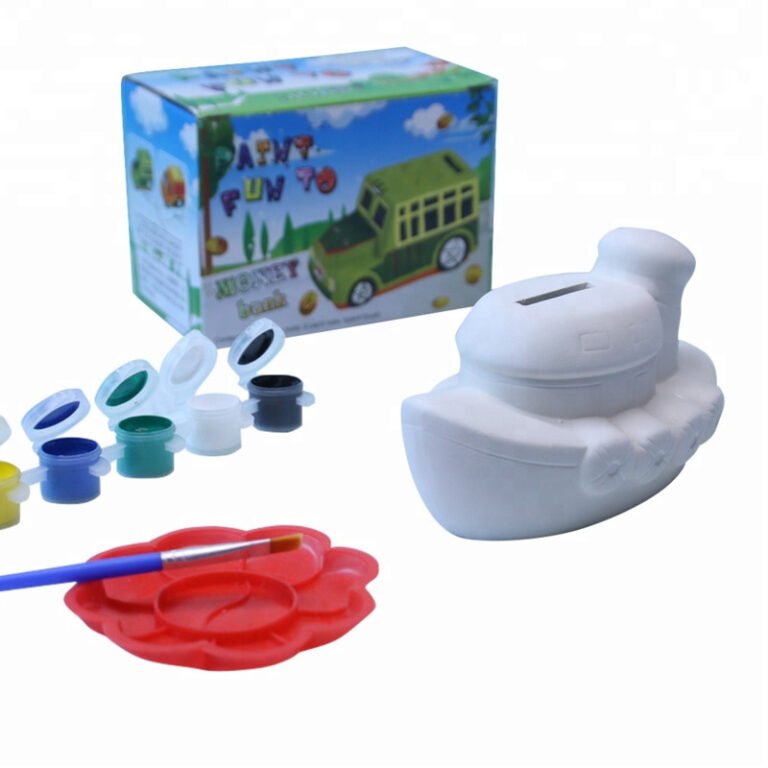
Dolomite ceramic is a low-fire body, typically fired around 1,000-1,100°C, and it stays highly porous. It is inexpensive, it molds fine detail cleanly, and it paints well – which is why most seasonal figurines and painted gift ceramics on the market are dolomite.
The limitation is just as clear: dolomite should never be specified for food contact, drinkware or candle vessels that hold a live flame. If a supplier quotes dolomite for a mug or a candle jar because the price looks attractive, that quote is a future complaint, not a saving.
How should buyers choose a ceramic material by use case?
- Mugs and dinnerware: porcelain for premium lines, stoneware for everyday lines. Keep earthenware and dolomite away from daily hot-liquid duty.
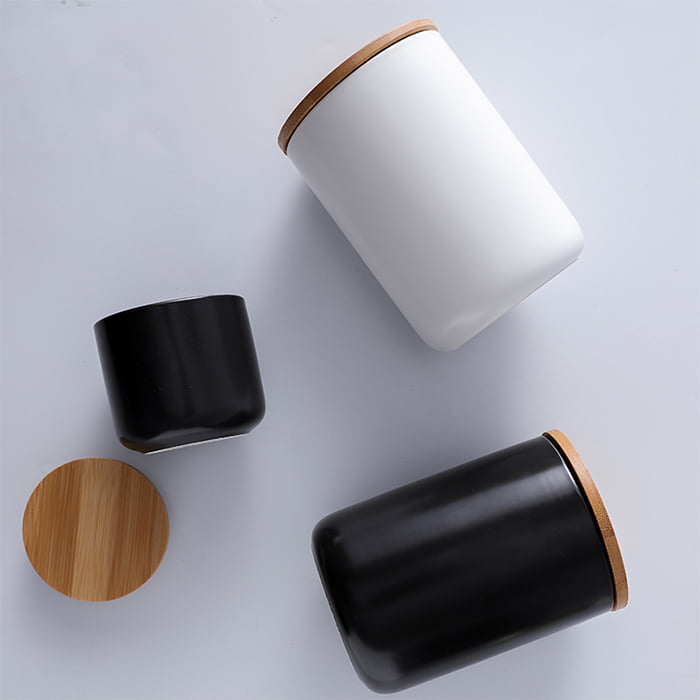
- Candle vessels: dense stoneware or porcelain. The body must tolerate repeated heat cycles, and a lid demands dimensional stability – our wholesale ceramic candle jars run stoneware with wood, bamboo and gold-metal lids.
- Vases and planters: stoneware when the piece will hold water directly; earthenware is fine with a liner or for dry arrangements.
- Figurines, seasonal decor, painted gifts: earthenware or dolomite – decoration-only, priced to sell.
What does the wrong material choice actually cost?
In our experience, material-related complaints are the cheapest failures to prevent and the most expensive to live with – because the failure happens on the end customer’s kitchen counter, long after the container has shipped.
The failure patterns repeat: an earthenware mug sold for daily coffee that stains through the glaze within weeks; a decorative dolomite bowl specified for fruit that chips in transit; a thin, low-fired candle jar chosen on price that cracks during a burn test at the customer’s home. Each ends in returns, chargebacks and a damaged listing – and none of it is fixable by QC, because the product was made exactly as specified. Our factory works to BSCI, SEDEX and ISO 9001 systems precisely so that material, glaze and firing data are documented before production rather than debated afterward.
FAQ: porcelain vs stoneware vs earthenware vs dolomite
Is porcelain better than stoneware?
Not universally. Porcelain is denser, whiter and absorbs less water (<0.5% versus ~1-3% for stoneware), but it costs more. For everyday mugs and dinnerware, stoneware offers the better price-to-performance balance; porcelain earns its premium on thin-walled or premium-positioned products.
What is the most durable ceramic for everyday dinnerware?
Stoneware, in most cases. Its ~1,200°C firing and forgiving body resist rim chipping well in daily use, and it costs less than porcelain. Edge durability on any piece depends on wall thickness and glaze fit as much as on the body itself.
Can dolomite ceramic be used for food or candles?
No. Dolomite is a low-fire, highly porous decorative body. Use it for figurines and seasonal decoration – never for mugs, plates or candle vessels.
Does water absorption matter if the piece is glazed?
Yes. Glaze can craze, chip or micro-crack in transit and in the dishwasher; when it does, the body underneath meets the water. A body with <0.5% absorption forgives glaze damage, while a body at 5-10% stains.
Can we test materials before ordering bulk?
Yes – we recommend it. Our terms: samples in 12-15 days, MOQ 1,000 pieces per design, bulk production in 45-60 days, payment by T/T or L/C. More answers are in our ceramic OEM FAQ, and the full body-by-body reference is in our ceramic materials guide.
Send us your product’s use case – food contact, decorative, or candle vessel – and we will recommend the body, glaze and firing schedule to match it. Email jeremy@zenithceramic.com or reach us on WhatsApp/WeChat at +86 186 7694 9245.